
Can Churches Use Wall Decals?
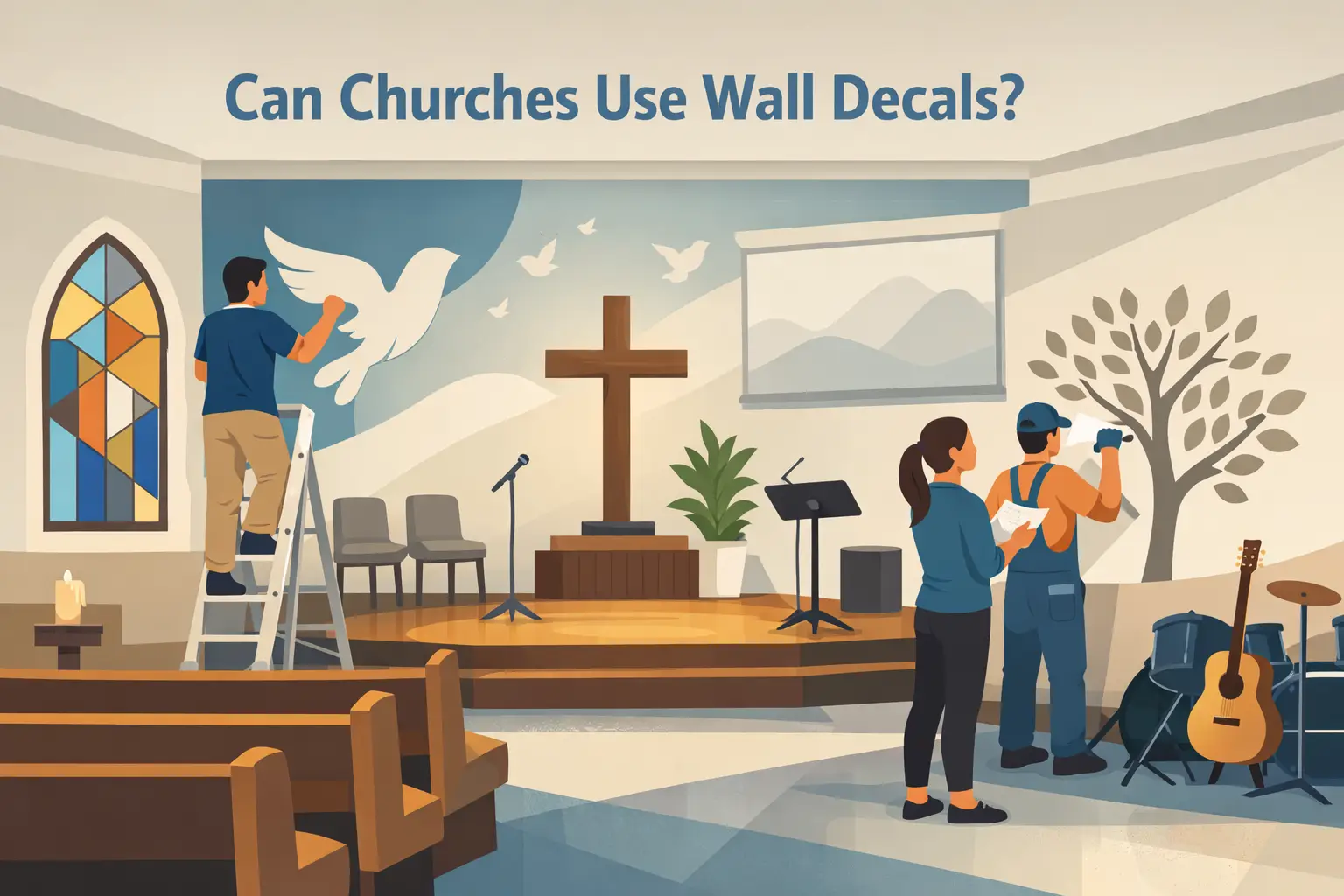
A blank church wall can send a message just as clearly as a thoughtfully designed one. If you are asking, can churches use wall decals, the short answer is yes. In many church spaces, decals and vinyl lettering are one of the simplest ways to add scripture, share a mission, guide visitors, and create a more welcoming environment without taking on a major renovation.
What makes wall decals especially useful for churches is flexibility. Ministries grow, classrooms shift, campaigns change, and spaces often serve more than one purpose during the week. A custom decal gives a church the ability to communicate clearly while keeping the process affordable, fast, and visually meaningful.
Can churches use wall decals in every space?
Usually, yes, but the best answer depends on the wall surface, the purpose of the message, and how permanent you want the design to be. Smooth painted walls, glass doors, office interiors, hallways, children’s areas, and fellowship spaces are all common places for decals and vinyl lettering. These surfaces tend to work well because they allow graphics to adhere cleanly and look polished.
There are a few cases where extra planning matters. Heavily textured walls, brick, raw concrete, or surfaces with peeling paint may need a different material or a custom printed panel instead of standard vinyl lettering. Outdoor use also calls for different products than indoor ministry walls. The question is not only whether churches can use wall decals, but which type of wall graphic will perform best in that specific environment.
That distinction matters because churches often want something beautiful and durable, not something that looks temporary or starts lifting at the corners after a few months. A good design starts with the actual conditions of the space.
Why wall decals work so well for churches
Church buildings do a lot. On Sunday they welcome first-time guests, returning members, volunteers, and families. During the week they may host Bible studies, counseling, youth gatherings, school programs, office work, and community events. Every one of those interactions happens in a physical environment, and that environment can either reinforce your message or stay silent.
Wall decals help churches make their spaces speak with intention. A scripture verse in a prayer room can create a sense of peace. A mission statement in a lobby can remind staff, volunteers, and visitors what the church stands for. Directional lettering can make children’s check-in, restrooms, classrooms, and offices easier to find. In a fellowship hall or ministry center, visual messaging can help a large space feel more connected to the church’s identity.
This is where design becomes more than decoration. It becomes communication. The words on the wall shape first impressions, reinforce culture, and help people feel oriented the moment they arrive.
Best ways churches use wall decals
Some churches start with one statement wall. Others create a coordinated look across several rooms. Both approaches can work well.
Scripture decals are one of the most common choices because they bring encouragement into everyday spaces. A verse in a nursery, youth room, counseling office, or sanctuary entry can support the purpose of that room without overwhelming it. The most effective scripture walls are readable, thoughtfully scaled, and placed where people can absorb them naturally.
Mission and vision walls are another strong fit. When a church has spent time clarifying its mission, values, or welcome message, putting those words on the wall helps keep them visible. It also helps new visitors understand what matters to your ministry before anyone says a word.
Churches also use decals for practical communication. Room names, directional signage, children’s ministry check-in areas, volunteer spaces, and office doors all benefit from clear vinyl lettering. These smaller details are easy to overlook, but they can make a church feel much more organized and approachable.
Then there are seasonal and campaign-based graphics. Some churches want temporary messaging for events, sermon series, holiday displays, stewardship campaigns, or vacation Bible school. In those cases, removable or shorter-term options may make more sense than a permanent installation.
What to think about before ordering church wall decals
The most successful projects begin with purpose. Before choosing colors or fonts, it helps to decide what the wall needs to do. Is it meant to welcome people, offer inspiration, provide direction, recognize donors, or reinforce the church’s identity? Once that is clear, the design choices become much easier.
Scale is another big factor. A phrase that looks great on a laptop screen can feel too small once it is placed on a long hallway wall or too large in a quiet prayer room. Churches often benefit from seeing a layout preview before production so they can picture how the lettering will fit the actual space.
Color matters too. High contrast usually improves readability, especially in lobbies and hallways where people pass by quickly. At the same time, the design should still feel consistent with the church’s interior style. A children’s wing may call for something brighter and more playful, while a sanctuary office or counseling room may need a calmer, more understated look.
Installation should also be part of the conversation early. Many church decals are simple enough for staff or volunteers to install, especially on smooth walls and glass. Larger graphics, oversized mission statements, or multi-piece layouts may need more planning and a little extra patience. Clear instructions make a big difference.
Can churches use wall decals without making the space feel commercial?
Absolutely, and this is a concern many ministry leaders have. The key is intention. A well-designed church wall graphic should feel integrated into the environment, not like an advertisement pasted onto the wall.
That usually means choosing words with purpose, keeping typography clean, and using design elements that support the room instead of overpowering it. A welcoming phrase in an entryway can feel warm and personal. A scripture wall can feel reflective and grounding. Even directional graphics can feel elevated when they are designed with care.
Problems usually happen when churches try to fit too much onto one wall or mix too many styles across the building. Consistency helps. When fonts, colors, and messaging work together, the result feels thoughtful and unified.
Custom vs. ready-made options for churches
Some churches can use a ready-made scripture decal and get exactly what they need. If the message is straightforward and the size works, that can be a fast and practical solution.
Custom work becomes more valuable when the church wants to match existing branding, fit a specific wall size, include a mission statement, create donor recognition, or combine text with logos or printed graphics. This is often the better route when the goal is to make the space feel distinctly tied to that church’s identity.
For many ministries, custom is worth it because no two spaces are exactly alike. Ceiling height, paint color, traffic flow, and audience all affect what will look right in the room. Your wall, your message, your design choices - that is what turns a graphic into something meaningful rather than generic.
If your church is working through ideas and not sure where to start, that is normal. Many organizations know what they want people to feel in a space before they know what should go on the wall. A hands-on design process helps bridge that gap.
A simple answer to can churches use wall decals
Yes, churches can use wall decals, and in many cases they should. They are a practical, affordable way to bring scripture, mission, welcome, and wayfinding into the spaces where ministry happens every day. The best results come from matching the right material and design to the right wall, then keeping the message clear and purposeful.
A church does not need a full remodel to make its environment feel more intentional. Sometimes one well-placed message is enough to help someone feel seen, guided, or encouraged the moment they walk through the door.