
Custom Graphics Versus Painted Signage
A blank lobby wall can say a lot before anyone speaks. For a school, church, clinic, nonprofit, or small business, that wall can reinforce your mission, calm a visitor, guide a guest, or help your team feel connected to why they show up each day. When you start weighing custom graphics versus painted signage, the real question is not just what looks good. It is what will serve your space best over time.
Both options can be beautiful. Both can communicate clearly. But they work very differently when it comes to installation, cost, flexibility, detail, and long-term maintenance. If you are trying to create a space that feels intentional without adding unnecessary complexity, it helps to understand where each approach shines.
Custom graphics versus painted signage: the biggest difference
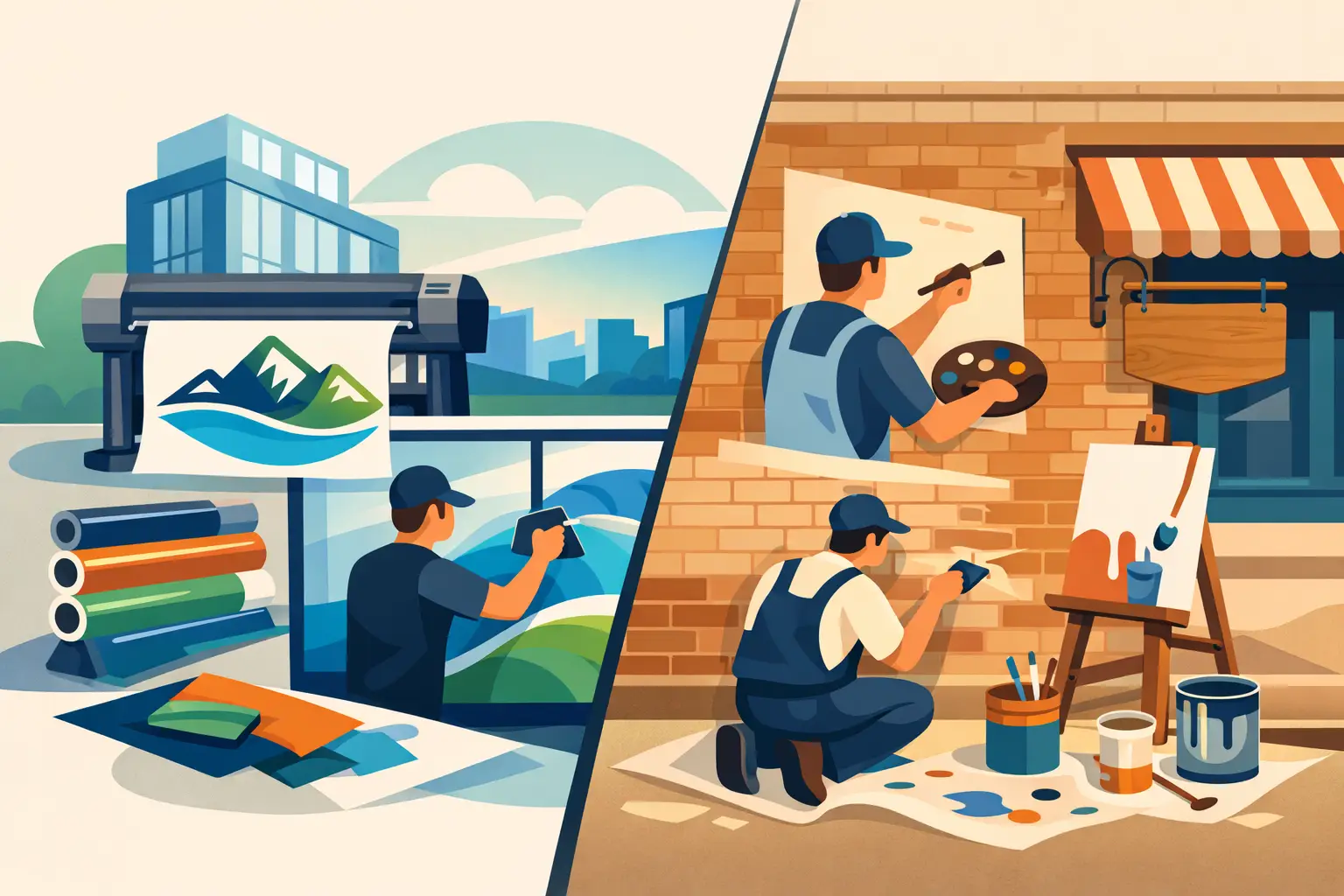
Painted signage is applied directly to the wall, window, or surface with paint and brushes, rollers, or stencils. It has a traditional, handcrafted look that some organizations love, especially when the goal is a mural-style feature or a one-of-a-kind artistic statement.
Custom graphics are typically produced from vinyl lettering, decals, or printed graphic panels and then applied to the surface. They can be cut with exact precision, printed in full color, and installed with a clean, polished finish. This makes them especially useful for mission statements, core values, branded messaging, directional signage, donor walls, office graphics, and interior window displays.
The difference often comes down to control. With custom graphics, you know exactly what the finished design will look like before it goes on the wall. With painted signage, there can be more variation based on the artist, surface conditions, and the installation environment.
When custom graphics make more sense
If your message needs to be sharp, consistent, and easy to reproduce across multiple spaces, custom graphics are usually the stronger choice. This is especially true for organizations that care about brand standards, readability, and clean presentation.
A nonprofit may need its mission statement in a reception area, its donor recognition display in a hallway, and additional messaging in event or meeting spaces. A school may want its values repeated throughout campus. A medical office may need calming environmental graphics that feel polished and professional in every room. In these settings, precision matters.
Custom graphics also make updates much simpler. If a staff wall changes, a logo is refreshed, office hours are adjusted, or a recognition display needs new names added, individual elements can often be replaced without repainting the entire area. That flexibility matters for growing organizations.
Speed is another major advantage. Once the design is approved, custom graphics can often be produced and installed faster than painted work, especially for text-heavy layouts or projects with multiple matching pieces. For busy teams, that shorter timeline can make a big difference.
Where painted signage still has a place
Painted signage can be a great fit when the goal is artistic expression rather than exact replication. A hand-painted mural in a children’s area, a creative accent wall in a boutique business, or a large decorative piece with visible brushwork can bring warmth and character to a space.
There is also a permanence to paint that some people appreciate. It becomes part of the wall itself rather than an applied layer. If the design is unlikely to change for many years and the visual style leans more organic than branded, paint may feel like the right match.
That said, permanence can be a drawback too. If your messaging changes, removing or covering painted signage usually takes more time, more labor, and more wall repair than updating vinyl graphics.
Cost depends on more than the first quote
When comparing custom graphics versus painted signage, many buyers start with the upfront price. That makes sense, but the initial quote only tells part of the story.
Painted signage may appear straightforward at first, especially for simple designs. But labor costs can rise quickly when artwork is detailed, text needs to be perfectly spaced, or multiple revisions are involved. Surface prep, drying time, and touch-ups can also add to the overall effort.
Custom graphics often provide more predictability. The design is finalized before production, material costs are easier to estimate, and installation tends to be more efficient for logos, lettering, and repeatable branded elements. For many interior environments, that makes budgeting easier.
The long-term cost matters too. If you anticipate updates in the next few years, custom graphics can be more cost-effective because they are easier to revise. If your message is fixed and the design is highly artistic, painted signage may still be worth the investment.
Detail, color, and consistency
This is one of the clearest dividing lines.
Custom graphics are ideal when your project depends on exact fonts, logo accuracy, specific brand colors, fine lines, or photo-quality printing. If your organization has established branding, custom graphics help you stay consistent from one wall or window to the next. That consistency builds trust. It helps visitors feel that your environment is cared for and aligned with your identity.
Painted signage can absolutely be impressive, but matching exact colors and achieving crisp, repeatable details can be harder. The more intricate the design, the more custom graphics tend to pull ahead.
For a donor wall with dozens of names, a mission statement with precise typography, or a set of office graphics that need to match across locations, graphics usually offer a cleaner path.
Installation and disruption to your space
For organizations that are actively serving people every day, disruption matters.
Paint often requires more on-site time. There may be masking, priming, painting, drying, and return visits for detail work. Depending on the project, odors and room access can become part of the planning.
Custom graphics are often less disruptive, particularly for interior wall lettering and printed decals. Installation is typically cleaner and faster, which can be a major advantage for schools, clinics, churches, and offices that need to keep spaces functional.
That does not mean every graphics project is instant. Surface condition, wall texture, project size, and installation complexity still matter. But if your goal is a polished result with minimal interruption, custom graphics are often the easier route.
What about durability?
Both options can last well when they are professionally executed and installed on the right surface. The better question is how the surface will be used.
In high-touch interiors, wear and tear can affect any finish. Painted walls may scuff or need touch-up work. Graphics can also be damaged if they are scraped or applied to unsuitable textures. The best choice depends on the wall condition, traffic level, and how often the space is cleaned.
For windows, custom graphics clearly have the advantage. Painted signage is rarely the practical choice there, while vinyl window lettering and printed window graphics are made for that application.
In many interior settings, well-made custom graphics offer an excellent balance of durability and easy replacement. If a section becomes damaged, it is often possible to replace that portion without starting over from scratch.
Choosing based on the role of the space
The most helpful way to decide is to think about what the space needs to do.
If your wall needs to communicate information clearly, reinforce your brand, or display words that must be readable and consistent, custom graphics are usually the better fit. They are especially strong for welcoming entryways, branded offices, school messaging, donor recognition, clinic interiors, and values-based displays.
If your wall is meant to function more like a painted art feature, with expressive texture and a handmade feel, painted signage may be the better choice. It can bring personality in a way that feels less structured.
Some organizations even combine both. A painted background mural can create atmosphere, while custom vinyl lettering layered over it delivers the message with clarity. That approach gives you the warmth of paint and the precision of graphics.
The right choice is the one that supports your message
There is no one-size-fits-all answer to custom graphics versus painted signage. The right solution depends on your goals, timeline, budget, design style, and how often your message may need to evolve.
For many mission-driven spaces, custom graphics offer the flexibility, clarity, and professional finish needed to make a strong daily impression. They help turn blank walls into meaningful communication tools without requiring a full renovation. And when you have the right design support, the process becomes much simpler, from concept to installation.
Your walls are already speaking. The opportunity is to make sure they are saying something clear, welcoming, and true to who you are.