
Custom Vinyl Lettering Review for Your Space
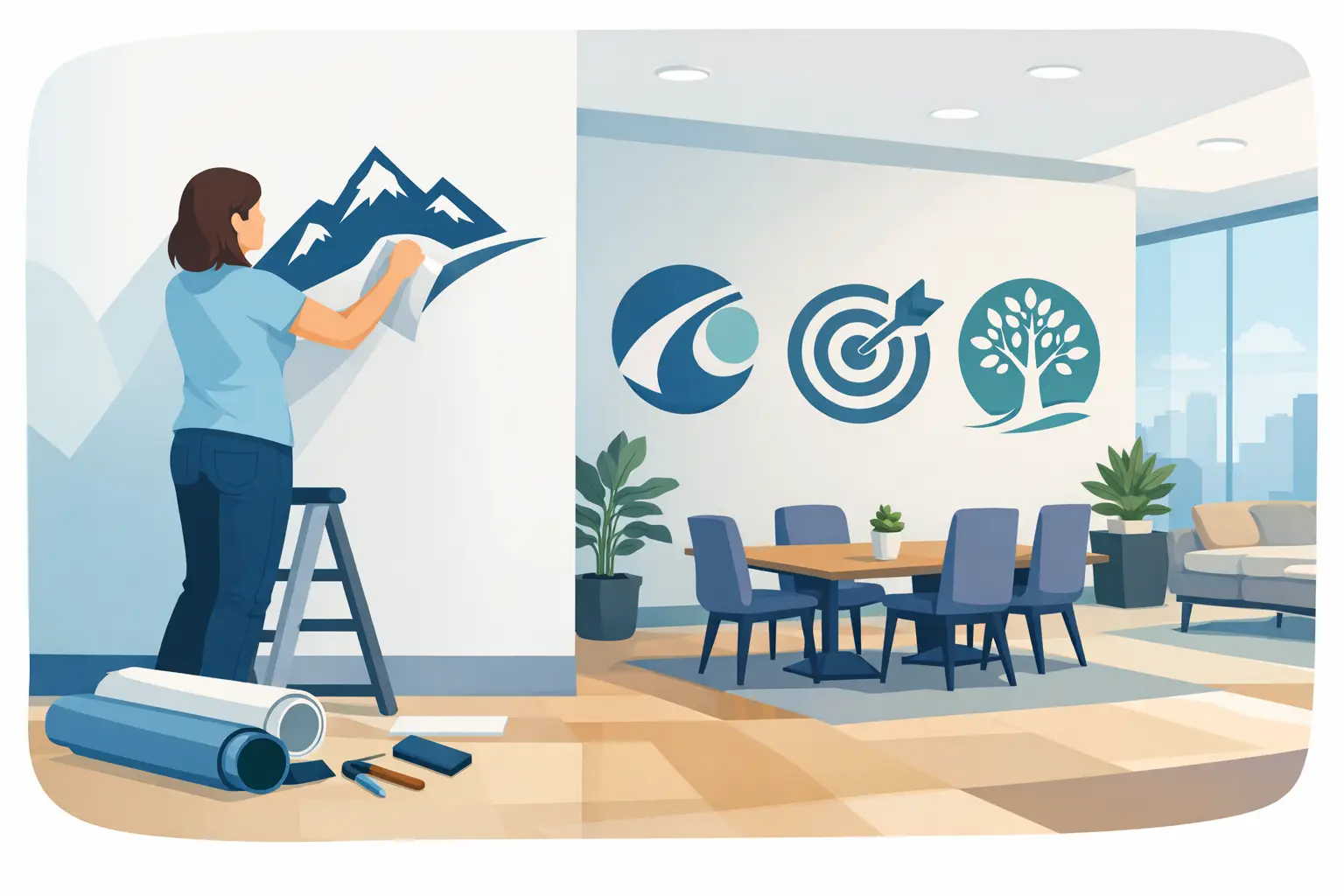
A lobby wall can answer a visitor’s first unspoken question before anyone says hello: What does this place stand for? That is why a thoughtful custom vinyl lettering review should look beyond color and price. The right lettering can make a mission statement feel present, give a school’s values a daily home, or help a wellness office feel calm and reassuring from the moment patients arrive.
For churches, nonprofits, schools, medical offices, and small businesses, vinyl lettering is not just decoration. It is a practical way to turn an empty wall, glass entry, reception area, or hallway into a clear expression of identity. The best choice depends on where the lettering will live, what people need to read, and how long the message needs to serve the space.
What a Custom Vinyl Lettering Review Should Consider
Custom vinyl lettering is made by cutting individual letters and shapes from adhesive vinyl. Once applied, the lettering appears painted directly on the wall or glass, but without the mess, cost, and permanence of paint. It can be used for a short phrase above a doorway or a full mission statement that anchors an entire gathering space.
The first question is not, “What font looks nicest?” It is, “What do we want people to feel, know, or do when they see this?” A church may want a scripture displayed with warmth and quiet confidence. A nonprofit may need its mission and impact language to be easy for donors and volunteers to absorb. A business may want customers and employees to recognize its values at a glance.
When the purpose is clear, the design decisions become much easier. A strong wall message does not have to say everything. It needs to say the right thing in a way that can be understood from the distance where people will actually stand.
Material quality affects the finished look
Not all vinyl is the same, and material quality matters more in a public-facing space than it may seem. Quality adhesive vinyl should lie flat, hold clean edges, and maintain a polished appearance over time. Thin, poorly cut material can make even a meaningful message look temporary.
Surface type also matters. Smooth, clean painted walls and smooth glass are generally excellent choices for vinyl lettering. Lightly textured walls can work, but deep texture may prevent small details from adhering evenly. Fresh paint needs adequate curing time before installation, while dusty, greasy, or heavily textured surfaces need extra attention before a project is approved.
A careful provider will ask about the installation surface before finalizing a design. That conversation protects the project and helps avoid the frustration of choosing a beautiful layout that is not suited to the wall.
Readability matters more than a trendy font
Fonts carry personality, but they also determine whether a message can be read quickly. Script fonts can bring warmth to a scripture, quote, or welcoming statement. Clean sans serif fonts often work beautifully for core values, directions, office hours, and mission language. The most effective designs often pair a more expressive font for emphasis with a simple, highly readable font for the supporting words.
Consider viewing distance before deciding on letter height. A phrase behind a reception desk may be read from several feet away. A mission statement in a lobby may need to be understood from across the room. Small lettering can look elegant in a digital proof but become difficult to read on a real wall.
Color deserves the same practical attention. High contrast usually makes a message easier to absorb. White lettering on a deep wall color, charcoal lettering on a pale wall, or a brand color that stands apart from the background can all work well. If the wall is visually busy, a simple color and clean layout often create a stronger result than intricate graphics.
Custom Vinyl Lettering Review: The Details That Build Confidence
A meaningful result comes from more than the finished decal. The experience before it arrives plays a major role, especially for busy teams managing facilities, events, volunteers, staff, or patients.
Design support should feel personal
Some organizations come prepared with a logo, exact wording, brand colors, and a clear installation wall. Others have a phrase, a few photos of the space, and a sense that the room needs to feel more welcoming. Both are valid starting points.
Helpful design support closes the gap between an idea and a confident decision. It includes checking spelling and line breaks, suggesting proportions that suit the wall, helping choose a font that fits the message, and providing a proof that makes the layout easy to picture. This is especially valuable for donor recognition displays, long mission statements, and multi-part wall arrangements where spacing affects the overall impact.
Wall Words provides in-house design support for this reason: the words themselves are only part of the project. Their placement, hierarchy, and relationship to the space determine whether people pause to read them or simply walk past.
Size should be planned for the wall, not guessed
One of the most common challenges with custom lettering is ordering a design that is either too small to carry the wall or too large for the available space. Measuring first is a simple step that makes a significant difference.
Start by measuring the usable width and height of the wall, accounting for furniture, doors, windows, light switches, trim, and artwork. Then think about the visual center. A design does not always belong in the exact center of a wall. It may need to align with a reception desk, doorway, seating area, or existing sign.
For a large message, a paper template or painter’s tape outline can help a team picture the final scale. This small planning step can prevent costly uncertainty and gives stakeholders a clear way to approve the direction before installation day.
Installation guidance is part of the value
Vinyl lettering is designed to be approachable for many do-it-yourself installations, but clear instructions make all the difference. Large designs, detailed scripts, and multi-line layouts require patience and a level placement. A clean surface, measuring tape, masking tape, a squeegee, and enough time to work without rushing are usually the essentials.
For a large lobby wall or an important public area, it may be wise to have two people handle installation. One person can hold alignment while the other applies pressure gradually. If a project includes many separate pieces, labeling and a layout guide help keep the process organized.
Easy installation does not mean no preparation. The trade-off is simple: taking a little more time to measure, clean, and position the lettering usually leads to a much more professional result.
Where Vinyl Lettering Makes the Greatest Difference
Vinyl lettering works best when it supports a real moment in someone’s experience of a space. In a church entry, a welcoming phrase or scripture can set a reflective tone. In a nonprofit office, a mission statement can remind staff and volunteers why their work matters. In a school hallway, values and encouraging words can reinforce the culture students encounter every day.
Medical and wellness offices may use soft, reassuring language to make waiting rooms feel less clinical. Small businesses can use window lettering for hours and services, then extend their brand indoors through value statements, team messaging, or a focal wall behind the front desk.
There is also a practical advantage. Compared with a major renovation, custom lettering can change the feeling of a space quickly and with far less disruption. It is a good fit for organizations that want a finished, intentional environment while staying mindful of budgets and timelines.
Questions to Ask Before Ordering
Before approving custom vinyl lettering, confirm the exact wording, dimensions, color, font, installation surface, and desired placement. Ask whether the proof shows the full layout to scale and whether the vinyl is intended for the planned surface. If the design includes a logo or printed element, make sure the artwork file is clear enough for production.
It also helps to think ahead about longevity. A temporary event message may call for a different approach than a permanent core-values wall. A glass-door decal needs to remain readable from the appropriate side. A design placed in a high-touch area should be positioned where it will not be constantly rubbed or bumped.
The best custom vinyl lettering does more than fill blank space. It gives your people a daily visual reminder of what matters, creating a space that speaks with clarity long after the installation is complete.