
Designing School Value Walls That Belong
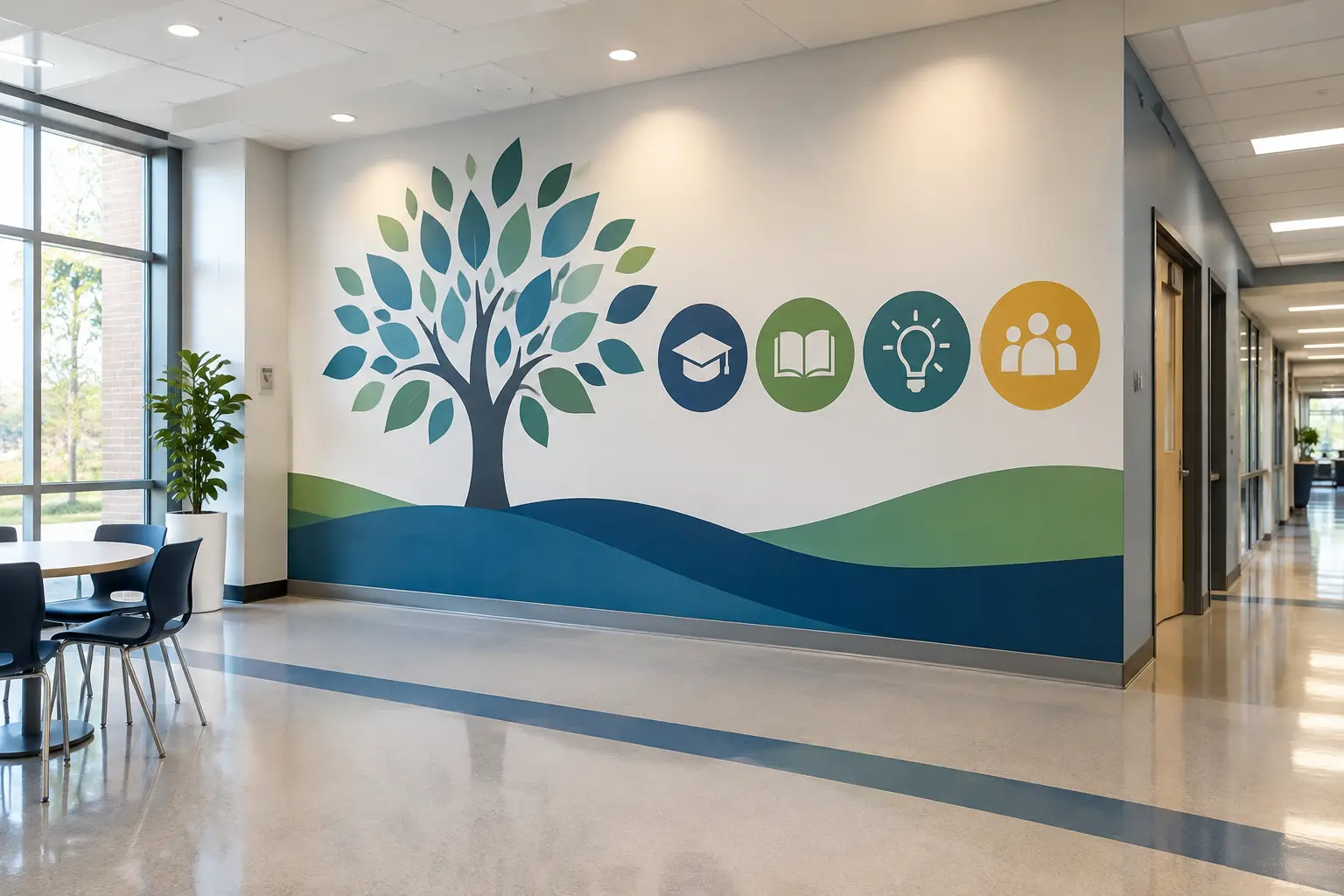
A student rounds the corner after a difficult morning and sees the words, “We show kindness. We keep trying. We belong here.” That wall may not solve everything, but it can offer a steady reminder of what their school believes about them. That is the heart of designing school value walls. It is not simply filling a hallway with words. It is helping students, staff, and families feel the culture of a school the moment they walk in.
A thoughtful value wall makes a school’s beliefs visible in the places where daily life happens: near the front office, outside the cafeteria, along a busy hallway, or in a classroom where students are learning how to work together. When it feels genuine, it becomes part of the environment rather than another poster people stop noticing.
Start With Values Your School Can Live Out
The strongest school value walls do not begin with a color palette or a font. They begin with an honest conversation. What do you want students to experience here? What do teachers hope to reinforce when a child makes a mistake, includes someone new, or chooses to keep going?
Many schools use values such as respect, responsibility, kindness, courage, curiosity, integrity, perseverance, and belonging. Those words matter, but they are most meaningful when everyone understands what they look like in real life. “Respect” can feel broad on its own. “We listen, include, and speak with care” gives students a clearer picture of how respect is practiced.
This does not mean every wall needs a long explanation. A central wall may feature three to five core values, each paired with a short, student-friendly phrase. For example, a school built around the values of kindness, growth, and community might use language such as: “Choose kindness,” “Keep learning,” and “Make room for everyone.” Simple language is easier to remember, repeat, and live.
Before choosing the final wording, invite input from the people who will see it every day. A small group of students, teachers, counselors, and families can help make sure the message sounds like your school, not a borrowed slogan. Their input also creates a sense of shared ownership. Values feel more believable when the community recognizes itself in the words.
Choose the Right Wall for the Message
Not every message belongs in the same place. Location shapes how a value wall is received and how often people engage with it.
A main entry or front-office wall is a natural home for a school-wide statement of identity. This is where visitors form a first impression, where new families look for signs that their children will be known and cared for, and where staff are reminded of their common purpose. A clean display of core values, school colors, and a welcoming phrase can set the tone without overwhelming the space.
Hallways work especially well for values that students can carry from one part of the day to the next. Instead of one crowded wall of text, consider a series of coordinated moments: a word like “Belong” near student artwork, “Be Curious” near the library, or “Show Respect” where students gather before lunch. Repetition helps, but variety keeps the message from fading into the background.
Classrooms and counseling spaces often call for a gentler, more personal approach. A growth-minded phrase, calm affirmations, or language that encourages students to ask for help can support the work happening in that room. Younger students may respond to shorter phrases and visual icons, while middle and high school students often appreciate language that feels direct and respectful rather than overly cheerful.
The trade-off is visibility versus focus. A large feature wall creates a memorable statement, but smaller decals placed with intention can reinforce values more naturally throughout the building. Many schools benefit from both: one central wall that tells the big story and smaller messages that bring it into everyday moments.
Designing School Value Walls Students Will Notice
A value wall should be easy to read at the speed students move through a school. That sounds simple, but it affects every design choice. If the wall will be seen from across a lobby, large vinyl lettering and a limited number of words usually work best. If it is in a closer space, such as a classroom reading corner, you have more room for supporting phrases or simple illustrations.
Color can reinforce the feeling behind the message. School colors create familiarity and pride, while softer supporting colors can help a wellness-oriented message feel calm and approachable. High contrast is especially helpful in busy hallways. A light-colored phrase on a light wall may look subtle in a design mockup but disappear from view once the school day gets moving.
Typography matters, too. Decorative fonts can add personality, but the most important words should remain easy to read. A good rule is to use one clear primary font and one accent style at most. The goal is not to make the wall look busy or overly formal. It is to help students understand the message in a glance.
Graphics can add warmth when they support the words instead of competing with them. A simple mascot, school crest, hand-drawn stars, books, leaves, or student-created artwork may help the design feel rooted in your community. For a more polished, lasting option, custom vinyl lettering and printed wall graphics can combine your school’s colors, logo, values, and visual personality in one coordinated design.
It also helps to think about the wall itself. Painted cinderblock, smooth drywall, windows, and textured surfaces each need a different approach. Measure carefully, note door frames, outlets, bulletin boards, and sightlines, and take photos of the space before finalizing a design. Those small details can prevent a message from being hidden behind furniture or cut off by a doorway.
Make the Words Part of School Life
A value wall has more staying power when it is connected to what your school already does. Staff can point to it during morning announcements, use it as a prompt in classroom conversations, or recognize students who demonstrate a value in a specific way. The wall becomes a visual touchpoint, not a decoration with a message attached.
Avoid treating values as a list of expectations for students alone. The most welcoming walls speak to the whole community. Phrases such as “Here, we learn from mistakes” or “Every person has a place here” remind adults and students alike of the kind of environment they are building together.
Consider leaving room for the wall to grow. A permanent core-values display can sit beside a changeable section for student reflections, acts of kindness, monthly examples, or classroom commitments. This balance gives your school a consistent foundation while allowing students to see their own voices in the space.
For schools with several age groups, a shared set of values can have different expressions. Elementary spaces might say, “Use kind words,” while a high school hallway might say, “Speak up with respect.” The principle is the same, but the language meets students where they are. That thoughtful adjustment can make a school-wide culture feel more personal.
Plan for a Finish That Lasts
Paper posters are useful for temporary events and student projects, but a central value wall usually deserves a more durable finish. Vinyl lettering offers a clean, painted-on look without the mess and time of hand painting. Printed wall graphics can bring in color, logos, illustrations, and layered visual elements when the design calls for more than words alone.
Installation should feel manageable, especially for busy school teams. Clear instructions, careful measurements, and a plan for preparing the surface make a real difference. If you are coordinating a larger project, it helps to work with a design partner who can review photos of the space, guide sizing and color choices, and help you picture the finished wall before it is produced.
At Wall Words, that kind of care is part of the process. Every school has its own story, student body, and sense of purpose. A thoughtful design begins by listening to what you want people to feel when they walk through the door.
The best school value wall does not need to be flashy. It needs to be true. When students see words that reflect how their community hopes to treat one another, those words can become a quiet, daily invitation to help make that belief real.