
Glass Lettering vs Window Clings
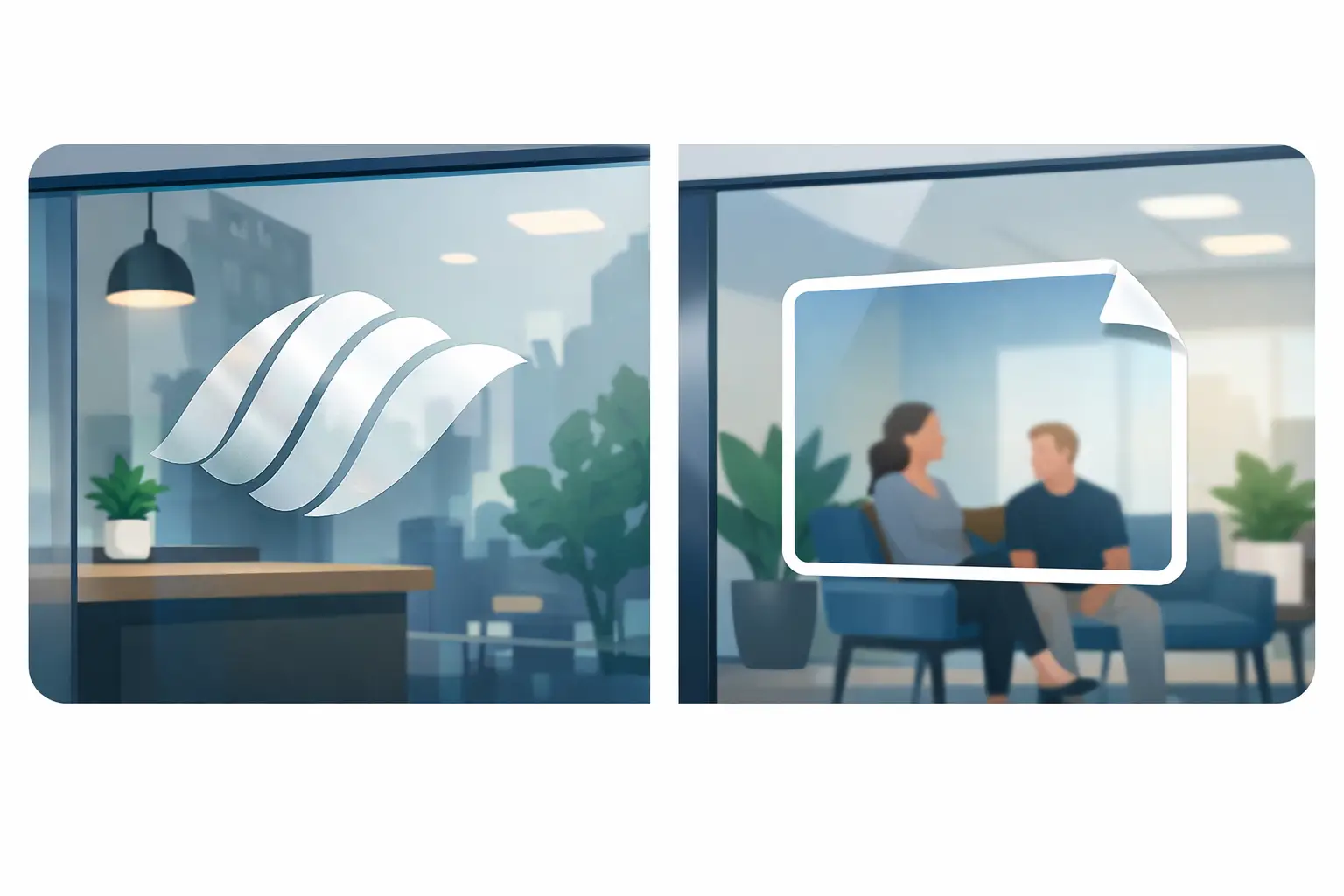
If you are weighing glass lettering vs window clings, you are probably trying to solve more than a design question. You are deciding how your space should communicate - to first-time visitors, loyal clients, staff, patients, donors, or anyone walking through your doors. The right choice can make your entrance feel polished, purposeful, and easy to understand at a glance.
For churches, nonprofits, medical offices, and small businesses, glass is often prime communication space. It can welcome people, reinforce your brand, create privacy, share hours, display a mission statement, or simply make a blank entry feel finished. But glass lettering and window clings do those jobs in very different ways.
Glass lettering vs window clings: what is the difference?
Glass lettering is typically made from cut vinyl applied directly to the glass. Instead of a full printed sheet, the design is cut to the shape of letters, logos, or simple graphic elements. That means you see the message itself on the surface, without extra background material around it. The look is clean, professional, and often closer to permanent signage.
Window clings are different. They are usually printed or solid pieces of material that adhere to glass without adhesive or with very light tack, depending on the product. They are designed for easier repositioning and removal. Because of that, they tend to be chosen for temporary promotions, seasonal messaging, short-term campaigns, or spaces where information changes often.
At a glance, glass lettering usually feels more built-in. Window clings usually feel more flexible.
When glass lettering makes the most sense
If your message is staying in place for the long haul, glass lettering is often the better fit. Think business names on entry doors, office hours, suite numbers, core values, frosted privacy bands, or ministry and nonprofit branding that needs to look consistent every day.
One reason people choose lettering is appearance. Cut vinyl has a crisp, intentional finish that works especially well in professional environments. On a front door or lobby partition, it looks less like a temporary add-on and more like part of the space itself. That matters when you want visitors to feel confidence the moment they arrive.
Glass lettering is also a strong option when readability matters. Clean, cut lettering is easy to see and does not compete with a printed background. If your goal is clear communication rather than decoration alone, that simplicity can be a big advantage.
There is also the issue of durability. In many indoor settings, vinyl lettering holds up very well over time. Once installed properly, it can continue looking sharp for years. For organizations that do not want to keep replacing graphics, that stability can make the investment worthwhile.
This is especially true for mission-driven spaces. A donor recognition message on glass, a calming privacy treatment in a wellness office, or branded conference room graphics often need to feel polished and lasting, not temporary.
When window clings are the better choice
Window clings shine when change is part of the plan. If you need to promote an event, share seasonal hours, advertise a fundraiser, feature a limited-time campaign, or rotate messages throughout the year, clings can be incredibly useful.
Their biggest advantage is flexibility. Because they are easier to remove and replace, they let you update your glass without committing to one message for the long term. That can be a relief for busy teams who need something practical and fast.
Clings can also work well when you want more visual coverage. Since they are often printed on a larger piece of material, they can carry full-color graphics, photos, or more detailed artwork in a way simple cut lettering cannot. If your design needs a poster-style feel on glass, clings may be the better tool.
For some organizations, clings are also helpful for testing. Maybe you are not fully sure what hours format, welcome message, or campaign creative will work best. A cling lets you try something without making a permanent-looking commitment.
That said, flexibility comes with trade-offs. Window clings are often more vulnerable to peeling, shifting, or looking less refined over time, especially in high-touch areas or if they are repeatedly removed and reapplied.
Appearance and brand impact
This is where the choice often becomes clear.
If you want a polished, built-in look, glass lettering usually wins. It tends to feel cleaner and more elevated, especially for logos, names, office hours, room identifiers, and frosted privacy graphics. In spaces where trust and professionalism matter - such as clinics, counseling offices, churches, and nonprofit headquarters - that visual difference can have real impact.
Window clings can still look attractive, especially for short-term uses, but they usually carry a more temporary visual language. That is not a flaw. It is simply part of the format. For event announcements or seasonal campaigns, temporary may be exactly what you want.
A helpful question to ask is this: should this message feel permanent or adaptable? If it should feel rooted in the space, lettering is often the stronger choice. If it should feel timely or changeable, a cling may be more appropriate.
Installation, removal, and maintenance
For many customers, the real decision comes down to how much effort they want to put into updates over time.
Glass lettering typically takes more care upfront. Proper alignment matters, especially for business names, hours, and multi-line messaging. But once it is installed, it generally requires very little attention beyond normal cleaning.
Window clings are easier to swap out, which is part of their appeal. If your team is updating promotions every few months, that convenience matters. Still, they can require more ongoing management. Corners may lift. Placement may need adjusting. Reapplication is not always perfect after removal.
If you are managing a busy office, ministry, or organization with a small team, that difference is worth considering. The lower-maintenance option is not always the one with the lower upfront cost.
Budget matters, but so does lifespan
When comparing glass lettering vs window clings, budget is rarely just about the initial price. It is about value over time.
Window clings can be cost-effective for short-term needs. If you need something for a campaign, holiday season, special event, or temporary notice, it does not make sense to invest in a more permanent solution.
But if the same message will stay up for a year or more, glass lettering often delivers better long-term value. You are not paying to replace it every season, and you are getting a more finished look from day one.
This is where it helps to think beyond materials. Ask how often the message will change, how important first impressions are, and how much time your team has to manage updates. A lower-cost product that needs frequent replacement may not be the most affordable choice in practice.
Best use cases for each option
Glass lettering is often best for entry door branding, office hours, suite numbers, privacy treatments, conference room names, mission statements on glass, and clean logo applications. It works well when the message is steady and the space needs to feel cohesive.
Window clings are often best for event promotions, seasonal campaigns, temporary wayfinding, fundraiser messaging, limited-time offers, and short-term announcements. They are useful when timing and flexibility matter more than permanence.
Some spaces benefit from both. A business or nonprofit might use permanent glass lettering for its main branding and add temporary clings for events or campaigns throughout the year. That combination gives you consistency without losing flexibility.
How to choose with confidence
The best choice is not about which option is better in general. It is about which one fits the job.
If your goal is a lasting, professional message that becomes part of your space, glass lettering is usually the right direction. If your goal is a temporary message that can change quickly and affordably, window clings are often the smarter pick.
It also helps to think about the feeling you want your space to create. When someone approaches your front door or sees your interior glass, what should they understand right away? Stability, clarity, and professionalism often point toward lettering. Energy, timeliness, and flexibility often point toward clings.
At Wall Words, we see this choice come up often because organizations are not just decorating glass. They are shaping how people experience their mission, brand, and message from the very first glance.
A good graphic does more than fill empty space. It helps people feel oriented, welcomed, and connected. If you start there, the right choice usually becomes much easier to see.