
Nonprofit Storytelling Displays That Make Impact Visible
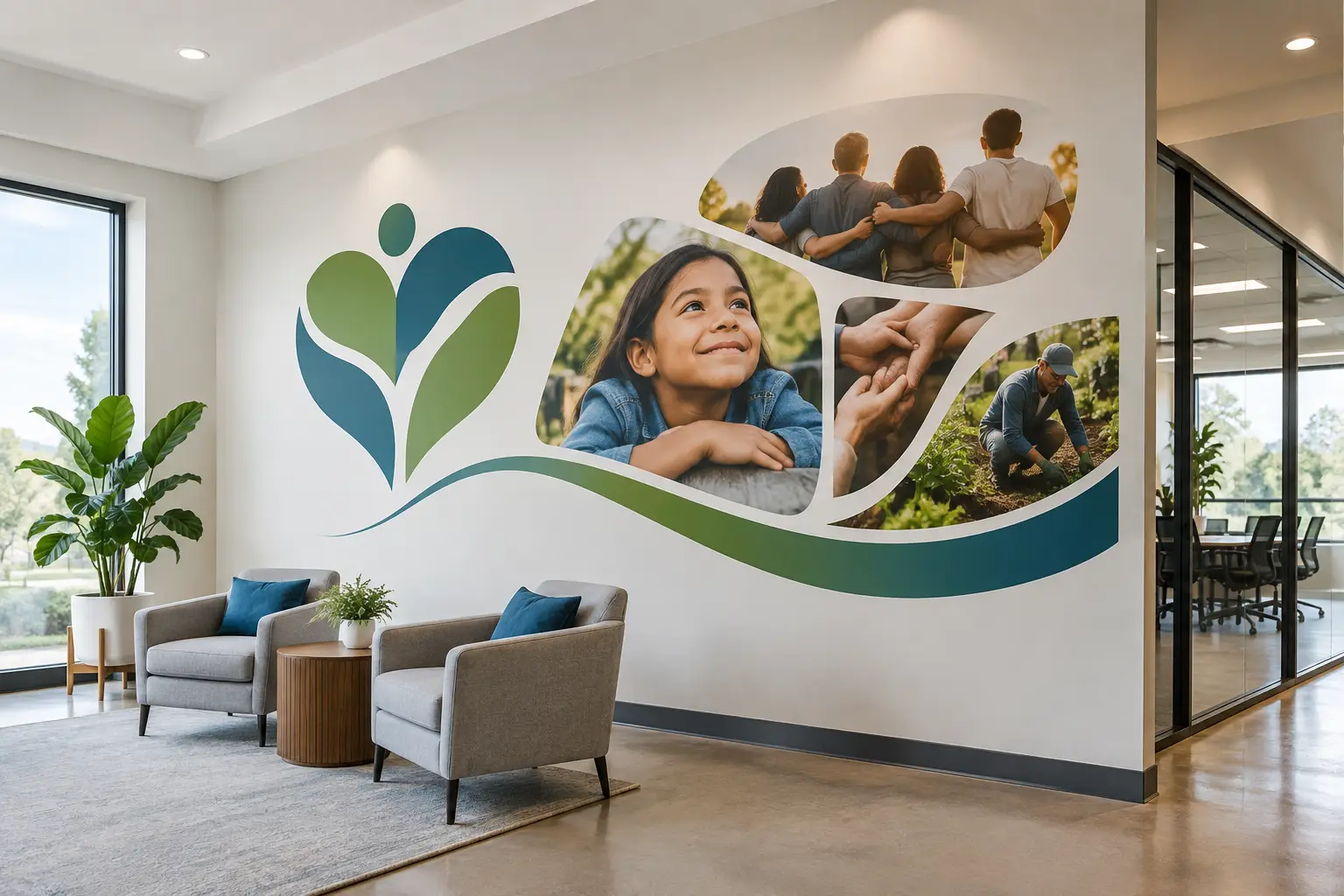
A visitor may only spend a few minutes in your lobby, hallway, waiting area, or community room. In that short time, nonprofit storytelling displays can help them understand who you serve, why your work matters, and how they can be part of it.
For a nonprofit, walls are often an overlooked part of the experience. They may be blank, crowded with outdated flyers, or filled with information that asks people to read too much before they feel anything. A thoughtfully designed display changes that. It gives your mission a visible home and helps people connect the work happening behind the scenes to the lives being changed every day.
What Makes a Storytelling Display Meaningful?
A storytelling display is more than a logo on a wall or a list of facts. It brings together the heart of your organization - your purpose, your people, and the impact of their support - in a way that feels clear and personal.
The strongest displays do not try to tell every chapter of your story at once. They choose a message that matters most in that space. A welcome wall near the entrance might share a simple promise to the community. A hallway could feature short stories, meaningful milestones, or words from those your organization serves. A donor recognition wall can express gratitude while showing what generosity makes possible.
This is where words and visuals work together. Custom vinyl lettering can make a mission statement feel present rather than tucked away in a brochure. Printed wall graphics can add photos, illustrations, timelines, or impact-focused design elements. Window decals can carry a message outward to the neighborhood before someone even walks through the door.
The goal is not to make your space feel like a report. It is to help people feel connected.
Start With the Feeling You Want People to Carry
Before choosing colors, fonts, or photos, pause and ask a simpler question: What should someone feel here?
A family arriving for services may need reassurance and hope. A first-time volunteer may need to understand where they fit. A longtime donor may want to see that their generosity is valued. Your staff may need a daily reminder that their work has purpose, especially on the hard days.
That feeling becomes a helpful guide for every design choice. A calm, welcoming message may call for open space, gentle colors, and a few carefully chosen words. A youth-focused space may be brighter, more energetic, and more visual. A donor wall may feel polished and appreciative without becoming overly formal.
It depends on your organization, your audience, and the role of the room. What works beautifully in a front lobby may not be right for a private counseling area or a busy volunteer workspace. There is no single formula, but there should be a clear reason behind what people see.
Choose the Right Story for Each Space
Your organization has many stories worth telling. Trying to fit all of them on one wall can make the message harder to absorb. Instead, let each area carry one part of the larger picture.
The entryway: Share your welcome and purpose
The entrance is a chance to say, “You belong here.” Consider a brief welcome message paired with your mission, a statement about the people you serve, or a simple phrase that reflects your values. Visitors should not have to guess what your organization cares about.
A mission statement in dimensional-looking vinyl lettering or clean wall lettering can become a meaningful focal point. Keep it readable from a natural viewing distance, and give the words room to breathe. If your mission is long, a shorter promise or purpose statement may work better on the wall, with the full version available elsewhere.
The hallway: Show the journey
Hallways invite people to move, pause, and take in a story over time. This is a natural place for a timeline, key milestones, community impact, or a series of short quotes. You might highlight the year your organization began, a few moments of growth, and the people who continue the work today.
Photos can make a hallway display especially personal, but use them with care. Choose images that respect the people pictured and reflect your organization honestly. A small caption beside each image can provide context without asking people to read a long block of text.
The gathering space: Make impact easy to understand
In a volunteer room, event space, or community area, an impact wall can help people see the results of shared effort. This may include simple numbers, but numbers mean more when they are connected to real outcomes. Rather than displaying only “500,” explain what that number represents: 500 meals shared, 500 students supported, or 500 families welcomed.
Pair practical facts with a human message. People remember the feeling behind the number.
The donor area: Lead with gratitude
Donor recognition displays should feel like a sincere thank-you, not a crowded list of names. The design can include donor names, giving levels, recognition categories, or a message about the future their support helps create.
Think about how the display can grow. If names will be added each year, plan for that from the beginning. Individual vinyl names, replaceable panels, or a flexible layout can help your wall stay current without requiring a complete redesign.
Design for Real Life, Not Just the First Reveal
A beautiful display should also be practical for the people who care for the space. Consider lighting, wall texture, traffic flow, cleaning needs, and how often the information may change. Glossy finishes can catch light in a sunny lobby. Highly detailed graphics may be difficult to read from across a room. A design placed behind a door or furniture can lose its purpose quickly.
Readability matters, too. Use clear fonts, enough contrast between lettering and the wall color, and sizing that matches the viewing distance. A message intended to be read from ten feet away needs a different scale than a quote placed beside a seating area.
If your wall has texture, unusual paint, or a challenging surface, it is worth talking through the details before production. The right material and installation approach can make a meaningful difference in how the finished display looks and lasts.
Let Your Team Be Part of the Story
The people closest to your work often know which words will resonate. Invite staff members, volunteers, board members, or community partners to share the phrases, moments, and memories that capture your organization’s heart.
You do not need to turn every suggestion into wall text. In fact, a clear final message usually comes from editing carefully. But listening early can help you find language that feels true instead of generic. You may hear a phrase your team says often, a note from someone served by your organization, or a small story that captures the reason your work exists.
When staff see their shared values reflected in the space, the display can support culture as much as communication. It becomes a reminder that the daily tasks, meetings, and challenges all connect to something larger.
Bring the Idea to Life With Care
Many nonprofit leaders are carrying a full schedule already. You may know what you want people to feel but not know how to turn that into a finished wall. That is okay. A good design process begins with listening to your vision, learning about the space, and helping you make decisions one step at a time.
Start by gathering what you already have: your mission statement, logo files, colors, photos, donor list, key messages, and wall measurements. Even a few phone photos of the room can help clarify what is possible. From there, a custom design can bring your ideas together through vinyl lettering, decals, and printed wall graphics that fit your space and your story.
Wall Words approaches each project with that kind of care, from the first conversation through design, production, and installation guidance. Your wall, your designs, and a team ready to help make the details feel manageable.
The most meaningful storytelling display is not the one with the most words. It is the one that helps a person pause, understand, and remember why your organization is here. Give your mission a place to be seen, and let the people who walk through your doors feel the purpose behind every part of your work.