
12 Small Business Wall Branding Ideas
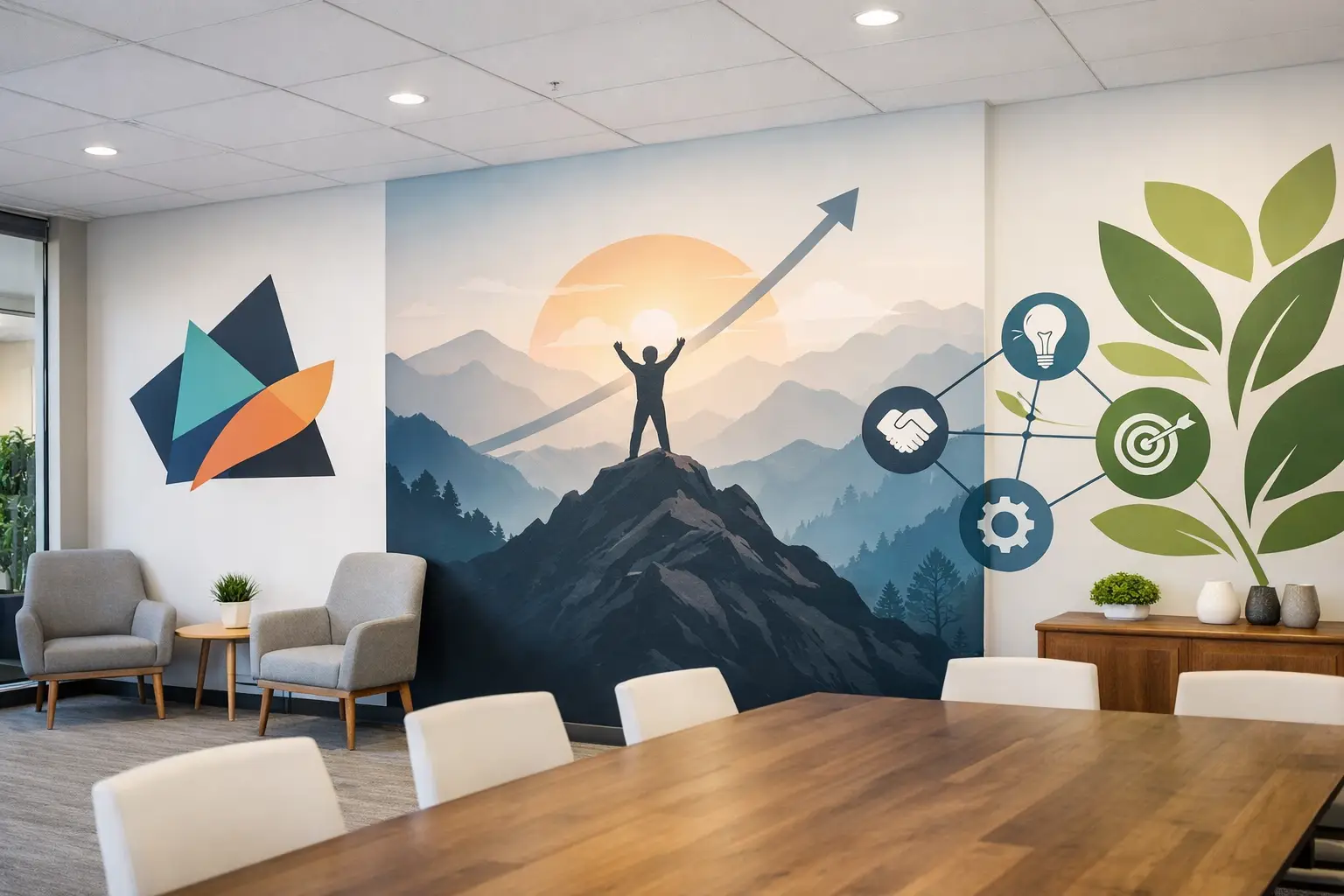
A blank wall says more than most business owners realize. It can make your space feel unfinished, forgettable, or disconnected from the experience you want customers and employees to have. The best small business wall branding ideas change that quickly. They give your space a voice, help people understand who you are, and make your brand feel present the moment someone walks in.
For many small businesses, the challenge is not a lack of ideas. It is figuring out what belongs on the wall, where it should go, and how to make it look polished without taking on a full renovation. The good news is that strong wall branding does not have to be complicated. With the right message and layout, even one well-designed graphic can shift the feel of an entire room.
Why small business wall branding ideas matter
Your brand is not just your logo, website, or business card. It also lives in your physical environment. If a customer visits your office, studio, clinic, showroom, or storefront, the walls around them are part of the impression you make.
That impression works on two levels. First, it shapes how customers feel about your professionalism, personality, and attention to detail. Second, it influences your internal culture. When your team sees your values, mission, and message reflected in the space around them, those ideas become more visible in everyday work.
This is especially valuable for small businesses. You may not have a massive marketing budget, but your space can still communicate confidence, clarity, and purpose. Thoughtful wall graphics help you do more with the square footage you already have.
12 small business wall branding ideas that work
1. Put your mission where people can actually see it
A mission statement should not be buried in a handbook or hidden on an about page. If your mission guides how you serve customers, it belongs in a place where staff and visitors will encounter it naturally.
A lobby wall, reception area, or conference room often works well. The key is editing for readability. A wall is not the place for a dense paragraph. Short, meaningful wording with clean spacing has a much stronger impact.
2. Turn your core values into a daily visual cue
Core values are one of the most effective branding elements for interior walls because they support both culture and customer trust. They remind your team what matters and show visitors what you stand for.
This can be done in a simple text layout, a more graphic style with icons, or a bold typographic design that becomes a focal point. If your values are too generic, though, the wall will feel generic too. Specific words and phrases tend to carry more weight.
3. Use a logo wall that feels intentional, not oversized
A logo wall is a classic choice, especially behind a reception desk or in an entry area. It gives customers a clear visual anchor and helps your business feel established.
The trade-off is that logo walls can look flat if they are the only branded element in the room. A logo works best when it is part of a larger environment that includes your colors, messaging, or supporting graphics. Size matters too. Too small and it disappears. Too large and it can feel heavy-handed.
4. Highlight a brand promise or customer-centered message
Sometimes the strongest wall statement is not about your business. It is about the people you serve. A short phrase that reflects your promise, approach, or commitment can create an immediate emotional connection.
For a wellness office, that might mean language centered on comfort or care. For a creative studio, it might focus on collaboration or originality. For a service business, it could reinforce trust, responsiveness, or quality. This kind of messaging works best when it sounds human and true to your brand voice.
5. Create a story wall about your business
Customers often want to know who they are working with, especially when they are choosing a local or independent business. A story wall can share your history, why you started, or what makes your work meaningful.
This does not need to be long. In fact, shorter is usually better. A few strong lines paired with your brand visuals can make your space feel far more personal. This is a smart option for businesses that want to build connection without relying on overly promotional language.
6. Brand glass walls and doors, not just drywall
One of the most overlooked opportunities in commercial spaces is glass. Interior windows, conference room glass, and entry doors can all carry branding beautifully.
Frosted vinyl, logos, privacy bands, and subtle message placement can make a space feel polished while also serving a function. This is especially helpful in offices, clinics, and shared environments where privacy and professionalism both matter. The design should stay clean, since glass can become visually cluttered faster than a standard wall.
7. Use directional branding to make navigation feel better
Wayfinding can be branded too. Instead of treating signs as an afterthought, small businesses can use wall graphics to guide people through the space while reinforcing visual identity.
This works well in larger offices, salons, coworking environments, fitness spaces, and multi-room service businesses. Room names, directional arrows, and labeled zones can all reflect your fonts, colors, and tone. Practical branding often leaves a stronger impression than decorative branding alone.
8. Feature customer testimonials or impact statements
If trust is central to your business, a testimonial wall or impact-focused message can do a lot of work. This approach is especially effective in spaces where people are making considered decisions, such as medical offices, professional services, or education-related businesses.
The best version of this idea is selective. One or two powerful statements are usually more effective than trying to fill a wall with too much text. Keep the design easy to scan and visually consistent with the rest of your branding.
9. Build a values wall for employee spaces
Not every wall graphic needs to be customer-facing. Break rooms, staff corridors, training rooms, and internal meeting spaces are ideal places for messages that support team culture.
This could include values, encouragement, team commitments, or even a visual reminder of the difference your work makes. Internal branding matters because culture is not formed only in meetings. It is shaped by what people see every day.
10. Add a branded quote that reflects your personality
A quote wall can be meaningful when it feels connected to your business and audience. The wrong quote can feel like filler. The right one can reinforce your identity and make the space more memorable.
This works best when the message aligns with your purpose rather than just sounding nice. A business known for thoughtful service may want a quote about care, excellence, or people. A creative business may want language that speaks to imagination or building something meaningful.
11. Use color blocking and typography for a modern look
Not all wall branding has to be text-heavy. Sometimes a bold color field paired with a short phrase or clean lettering creates the strongest effect.
This style tends to work well for contemporary offices, retail interiors, and client-facing businesses that want a fresh, confident look. It is also useful when your brand already has strong colors but your physical space feels plain. Even a simple accent wall with branded typography can make the environment feel more complete.
12. Create a photo moment customers want to share
If your business welcomes foot traffic, consider a wall designed for photos. This might include your logo, a short branded phrase, or a graphic backdrop that fits your aesthetic.
The idea is not to force social sharing. It is to create a spot that feels fun, polished, and worth remembering. This approach can be especially effective in boutiques, salons, cafes, fitness studios, and event-based businesses. It depends on your audience, though. In more private or professional environments, a quieter branding approach may be a better fit.
How to choose the right wall branding idea for your space
The right concept depends on what your space needs most. Some businesses need stronger first impressions. Others need clearer culture messaging for their team. Some need privacy on glass walls, while others need a focal point in a lobby that currently feels empty.
Start by asking three practical questions. What should people understand about your business within the first few seconds of entering? Which wall or glass surface gets the most visibility? And what message is important enough to live in your space every day?
From there, think about scale and placement. A long mission statement may work in a hallway but overwhelm a small reception area. A bold logo may look great behind a desk but feel repetitive if your signage already carries the brand heavily. Good wall branding is rarely about filling every blank surface. It is about choosing the right message for the right location.
What makes wall branding feel professional
Professional wall branding usually comes down to four things: clarity, proportion, material quality, and customization. The design should be easy to read, sized correctly for the wall, and created with materials that look crisp and finished once installed.
Customization matters more than many people expect. A message that fits your brand voice, your audience, and your space will always feel stronger than a generic design. That is why many businesses benefit from working with a team that can help shape the concept, refine the wording, and make sure the final result feels cohesive from a distance and up close.
At Wall Words, that kind of thoughtful process is often what turns a simple decal or graphic into a space that truly reflects the business behind it.
Your walls are already speaking. A purposeful design helps make sure they are saying the right thing.