
Wall Decals vs Painted Murals
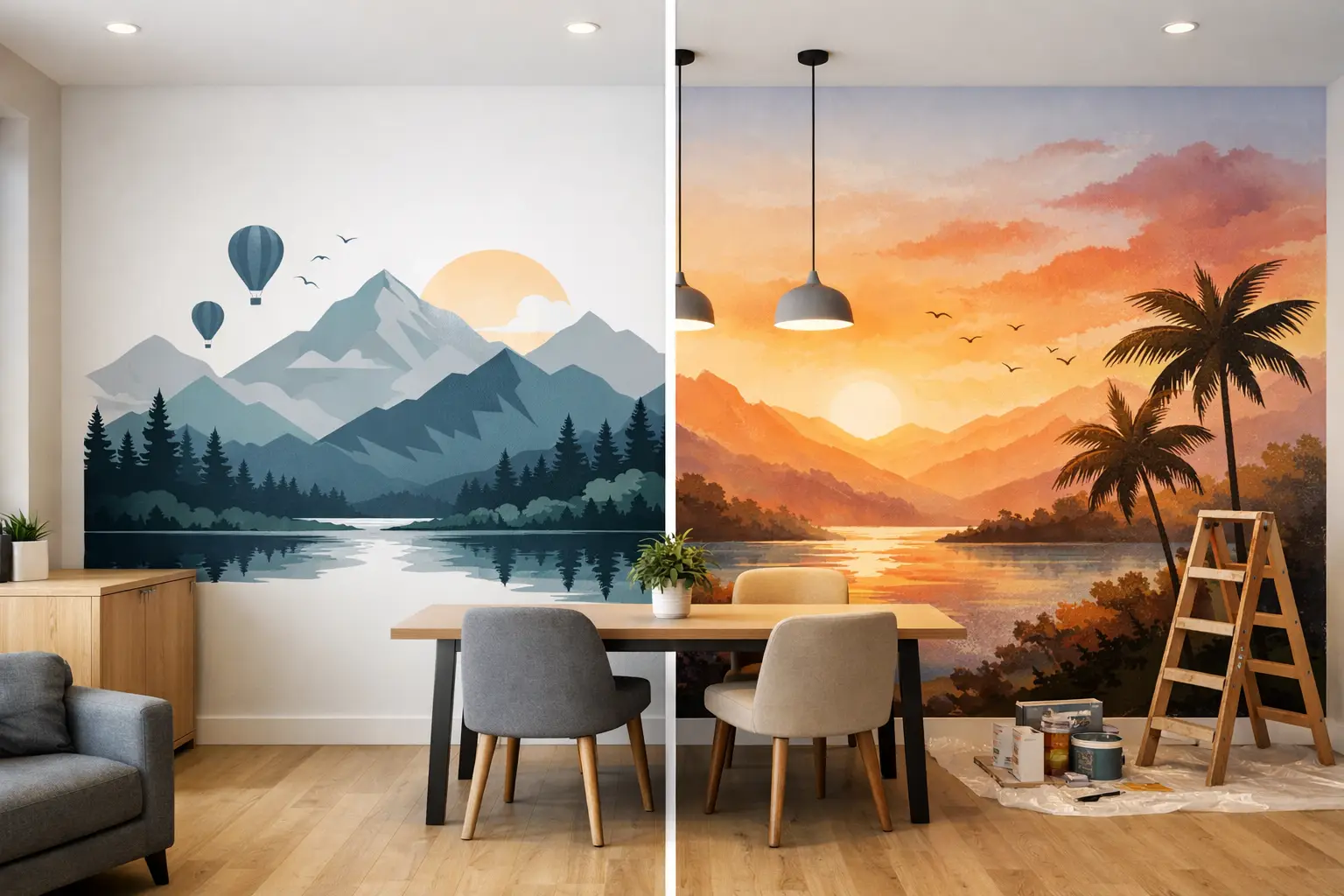
A blank wall can either stay forgettable or start doing real work for your organization. When teams compare wall decals vs painted murals, they are usually weighing more than style. They are deciding how quickly they need the space transformed, how often their message may change, and how much disruption their staff, students, patients, or visitors can realistically handle.
For churches, nonprofits, schools, medical offices, and small businesses, that decision often comes down to one simple question: do you need a permanent artistic statement, or do you need a flexible visual tool that communicates your mission clearly and beautifully right now? Both options can be meaningful. The better choice depends on your wall, your timeline, your budget, and the role the design needs to play every day.
Wall decals vs painted murals: what is the real difference?
At a glance, both can transform a space. Both can add color, personality, and purpose. But they function very differently.
Wall decals are typically made from cut vinyl or printed wall graphic material and applied directly to the wall surface. They can range from simple lettering and logos to full-scale custom graphics, donor walls, branded messaging, or large photographic designs. Painted murals are created by hand or painted from a design onto the wall itself, usually by an artist or mural painter.
That difference matters because it affects almost everything else - cost, speed, design precision, future updates, and installation conditions. If your goal is crisp lettering, exact brand colors, and a polished finish that looks consistent across multiple locations, decals often make that much easier. If your goal is a one-of-a-kind artistic piece with painterly texture and a handcrafted feel, a mural may be the better fit.
Cost depends on more than the first quote
Budget is often the first factor people look at, and understandably so. A painted mural can be a worthwhile investment, but it usually includes more variables. Artist fees, wall prep, design revisions, paint materials, ladders or lifts, and on-site labor all affect the final price. Highly detailed work or large walls can raise the cost quickly.
Wall decals are often more budget-friendly, especially for organizations that want strong visual impact without the cost of custom painting. Because the design is produced in advance, pricing tends to be easier to estimate. That can be especially helpful for schools, churches, and nonprofits working within approved budgets and timelines.
There is also the question of long-term value. If your message may change in a year or two, a painted mural can become expensive to update. A wall decal is usually easier to remove and replace, which can make it the more practical investment for mission statements, donor recognition, seasonal campaigns, departmental branding, or evolving office spaces.
Speed and disruption matter more than people expect
A beautiful concept is only helpful if you can actually get it installed without turning your building upside down.
Painted murals usually require more time on site. The wall may need patching, priming, and curing. The artist needs access to the space, and the work may stretch over several days or longer depending on size and complexity. In active environments like schools, clinics, churches, and offices, that can create scheduling challenges.
Wall decals are often the easier choice when timing is tight. Once the design is finalized and produced, installation is typically much faster. That means less noise, fewer interruptions, and a simpler path to completion. For busy organizations, that matters. If you need a lobby refreshed before an event, a values wall installed before staff onboarding, or a waiting room updated without major disruption, speed is not a minor detail. It is part of the strategy.
Design precision versus handcrafted character
This is where personal preference and brand needs really come into play.
Painted murals have warmth and texture that many people love. Brushwork can add life, movement, and a sense of artistry that feels deeply custom. In the right setting, that can be a powerful choice. A children’s area, a creative studio, or a feature wall designed to feel expressive and organic may benefit from that handcrafted look.
Wall decals shine when clarity and consistency are essential. Clean typography, exact logos, readable messaging, and polished layouts are much easier to control with graphic production. If your space needs to communicate values, directions, donor names, service lines, educational messaging, or branded statements, decals usually provide sharper results.
That is especially important when words are central to the design. A mission statement painted by hand can be beautiful, but spacing, legibility, and consistency may vary. Vinyl lettering and printed graphics give you more control, which helps when your wall is doing more than decorating. It is reinforcing identity.
Flexibility is often the deciding factor
Many organizations do not need a wall treatment that stays exactly the same for the next ten years. They need something that works now and can adapt later.
That is where wall decals often have the advantage. If your nonprofit updates donor recognition, if your school refreshes core values, if your office rebrands, or if your church changes signage in a growing campus, decals make those transitions much simpler. You can update one wall without repainting an entire room.
Painted murals are much less forgiving when change happens. Even small edits can require repainting, color matching, and artist availability. If flexibility is part of your reality, that can turn a beautiful wall into a complicated project faster than expected.
For many purpose-driven organizations, the message matters just as much as the design. And messages do evolve. Growth happens. New initiatives launch. Teams shift. A solution that leaves room for change can be the wiser choice.
Maintenance and durability are not one-size-fits-all
People sometimes assume paint is always more durable, but the truth is more nuanced.
A painted mural becomes part of the wall, which can be an advantage in low-contact areas. But painted surfaces can still scuff, fade, chip, or require touch-ups over time, especially in hallways or high-traffic spaces. Repairing those areas can be difficult if the original artist is unavailable.
High-quality wall decals are designed for interior use and can hold up very well when properly matched to the surface and environment. They are not ideal for every wall condition, though. Heavy texture, flaking paint, or moisture issues can affect performance. That is why evaluating the wall itself is so important before choosing either option.
In practical terms, decals are often easier to replace if a section gets damaged. Murals may be more permanent, but permanence and ease of maintenance are not the same thing.
When painted murals make the most sense
There are situations where a mural is absolutely the right call. If you want a large artistic statement with visible texture, custom illustration, and a truly hand-painted feel, a mural offers something decals do not try to imitate. It can create an experience that feels immersive and original.
Murals can also make sense in spaces where the artwork itself is the centerpiece rather than the message. If the goal is visual storytelling through art, and you have the budget, wall access, and timeline to support it, painting may be the better fit.
When wall decals are the stronger choice
Wall decals are often the better option when you need a space to communicate clearly, look polished, and come together efficiently. They are especially effective for mission statements, scripture walls, core values, donor displays, lobby branding, directional messaging, and custom environmental graphics.
They also work well when you need design support, predictable production, and a smooth process from concept to installation. For organizations that want custom results without the complexity of a mural project, that balance can be a huge relief. Your wall, your message, your design - with fewer moving parts.
For many schools, nonprofits, ministries, and businesses, the goal is not simply to fill a wall. It is to create a space that helps people feel where they are and why it matters. In those cases, clarity, speed, and flexibility carry real weight.
The better question is not which is better
The better question is what your wall needs to do.
If it needs to express art in a permanent, painterly way, a mural may be worth the investment. If it needs to communicate purpose with precision, adapt over time, and be installed with less disruption, wall decals are often the more practical and effective solution.
At Wall Words, we see this choice through the lens of function as much as style. The most successful spaces are not just attractive. They support the people inside them. They reinforce culture, welcome visitors, and make your mission visible in a way that feels natural and lasting.
A well-designed wall should not leave you wondering whether you picked the trendier option. It should make your space feel more aligned, more intentional, and more like the work you are there to do.