
Window Graphics vs Etched Glass
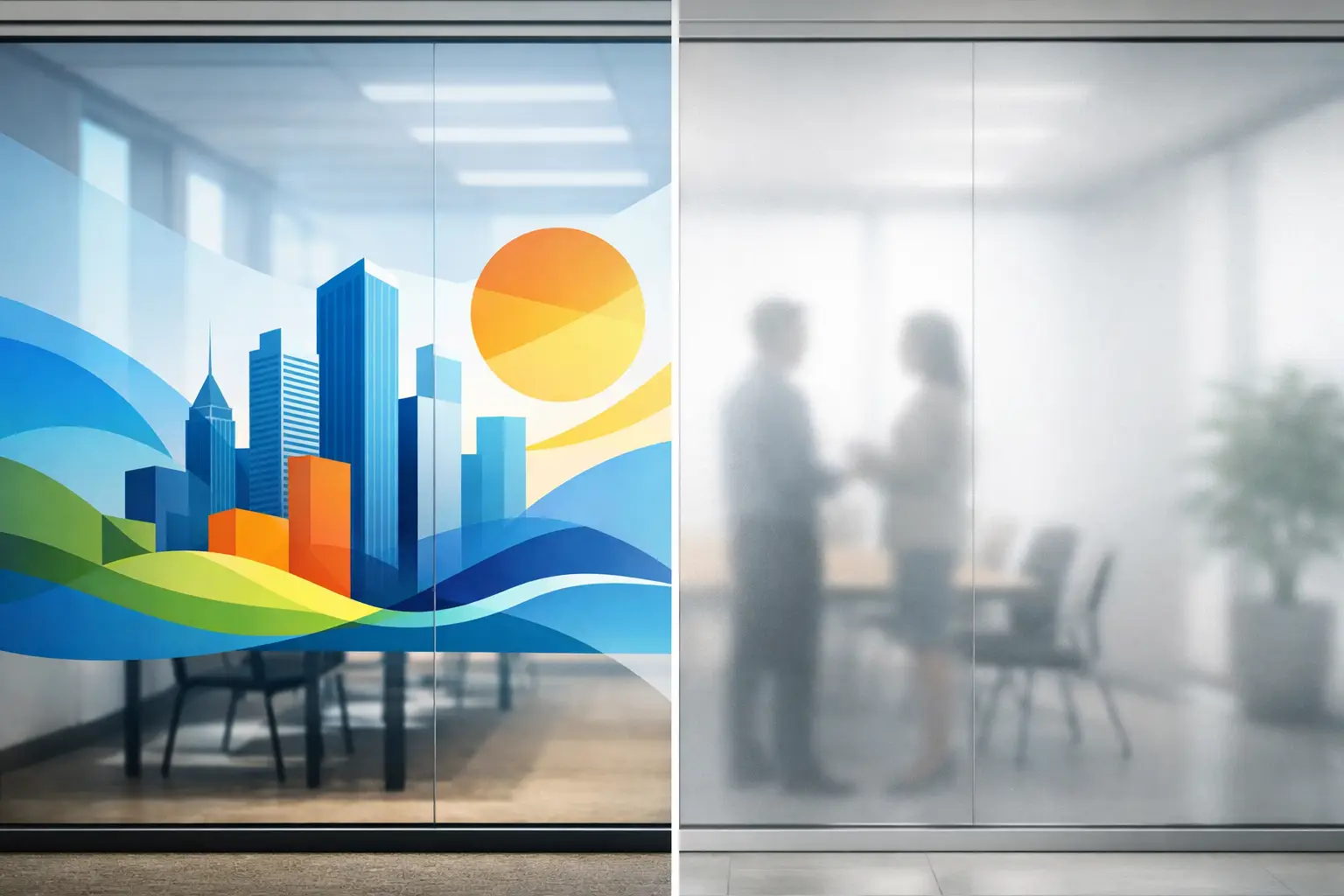
A front office window does more than separate one room from another. It sets the tone before anyone says a word. If you are weighing window graphics vs etched glass, you are probably trying to balance privacy, professionalism, budget, and the way your space makes people feel the moment they walk in.
For churches, nonprofits, schools, medical offices, and small businesses, that decision is rarely just about appearance. Glass can welcome people in, but it can also leave rooms feeling exposed. The right solution should create privacy where needed while still supporting your mission, brand, and day-to-day experience.
Window graphics vs etched glass: what is the difference?
At a glance, these two options can look surprisingly similar. Both can soften clear glass, add privacy, and create a polished finish. The difference is in how they are made and what that means for cost, flexibility, and long-term use.
Etched glass is actual glass that has been permanently treated to create a frosted or textured appearance. This is usually done through acid etching or sandblasting. The result is elegant and durable, but it is also permanent and typically more expensive.
Window graphics, on the other hand, are applied to the surface of existing glass. They can be made from frosted vinyl, printed film, cut lettering, or custom graphics designed to mimic the look of etched glass. When done well, they offer a clean, refined appearance with much more flexibility.
That flexibility matters more than many organizations expect. A donor wall changes. A department name gets updated. A conference room becomes a counseling office. A logo is refreshed. Permanent glass treatments are beautiful when the design never needs to change, but many spaces evolve.
Where etched glass makes sense
Etched glass has a strong reputation for a reason. It feels architectural, substantial, and timeless. In high-end offices or custom-built interiors, it can become part of the space itself rather than an added layer.
If you are designing a space from the ground up and know the layout, branding, and use of each room will stay fixed for years, etched glass may be worth considering. It can also be a good fit when the design is intentionally minimal and you want the finish to be part of the actual material palette.
Still, permanence is both the strength and the limitation. If a room name changes or a logo needs to be replaced, etched glass does not adapt easily. Updates usually mean replacing the glass or living with a design that no longer reflects the space.
For organizations that need room to grow, that trade-off can be significant.
Why window graphics are often the more practical choice
Window graphics give you many of the same visual benefits without locking you into one decision forever. That makes them especially appealing for busy teams who need a professional result and a straightforward process.
A frosted vinyl film can create the soft privacy of etched glass at a lower cost. Custom-cut graphics can add logos, names, mission-driven messaging, or decorative patterns while still keeping the overall look polished. If your goal is to make a counseling office feel discreet, a school entry look branded, or a church lobby feel welcoming and intentional, graphics open up more options.
They also work well when you want your environment to do more than just look finished. Glass can carry your identity just as powerfully as a wall can. A conference room divider can display your core values. A wellness office can add calm, subtle privacy bands. A nonprofit can include branded elements that make its purpose visible without overwhelming the room.
That is where custom window graphics really stand apart. They are not just a privacy solution. They are a communication tool.
Cost, maintenance, and long-term value
For most organizations, budget is part of the decision. Not because they want the cheapest option, but because they need the best use of their resources.
Etched glass generally costs more due to fabrication, specialty labor, and installation. It may be a worthwhile investment for a permanent buildout, but the upfront expense is usually higher. If you need multiple offices, conference rooms, storefront panels, or interior partitions treated, that cost can rise quickly.
Window graphics are usually more budget-friendly and easier to scale across a space. You can create a consistent look on several glass surfaces without the custom fabrication costs that etched glass often requires. For schools, ministries, nonprofits, and growing businesses, that often means you can improve more of the environment instead of spending the entire budget on one area.
Maintenance is fairly simple for both when properly installed and cared for. Etched glass hides fingerprints well, though it still needs cleaning. Frosted window films also hold up nicely in everyday settings and can be cleaned with appropriate products. The bigger difference is replacement. If a graphic gets damaged or your design changes, updating window film is far easier than replacing etched panels.
Privacy is not one-size-fits-all
Privacy sounds simple until you start thinking about how each room is used.
A counseling office may need full visual privacy. A conference room may only need partial coverage at seated eye level. A medical office may want a balance between confidentiality and openness. A school office might need safety visibility with just enough frosting to reduce distraction.
This is one of the strongest arguments in the window graphics vs etched glass conversation. Graphics can be tailored with much more control. You can frost just the lower half of the glass, add stripes or geometric bands, include cut-out logos, or create privacy zones that still let in light.
With etched glass, customization is possible, but it tends to be less adaptable once installed. With graphics, you can design for exactly how the space functions now.
That practical customization often leads to better everyday results. The room feels right because the glass treatment was designed around its purpose, not just its appearance.
Branding and mission visibility
Some spaces only need privacy. Others need privacy plus meaning.
That is where window graphics become especially valuable for organizations that care about culture and communication. A plain frosted panel can look clean and professional, but custom graphics can do more. They can carry a logo, repeat a visual motif from your brand, display a room name in a consistent font, or reinforce a message that matters to your team and the people you serve.
This is especially helpful in mission-driven environments. When your space reflects who you are, people feel it. A donor meeting room, intake office, administrative suite, or reception area can all communicate intention through thoughtfully designed glass graphics.
The goal is not to clutter the glass. It is to make the environment feel aligned. Your space should support your message, not stay silent.
What to ask before you choose
The best choice depends on how fixed your space really is. If your layout, branding, and room functions are unlikely to change, etched glass may be a strong long-term fit. If you need flexibility, faster turnaround, lower upfront cost, or custom messaging, window graphics are often the better answer.
It also helps to ask how hard you want your glass to work. If you just want a permanent frosted finish, etched glass may be enough. If you want privacy plus branding, wayfinding, or a more customized look, graphics usually offer more value.
And then there is the practical question many teams appreciate most: how easy will this be to update later? That question alone often points people toward graphics.
For many organizations, the right choice is not the one that sounds most permanent or premium on paper. It is the one that supports the way the space is actually used and gives you room to adapt with confidence.
Thoughtful design is not about adding more. It is about making each surface serve a purpose. When your glass can create privacy, reflect your identity, and still leave space to grow, it starts doing far more than dividing a room.